
[Reading] Down the Line.
(a poem)

hey, you. i’m going to take a break from poetry after this, but that’s alright because the empress has her groove back (somewhat) and i’ve got more to say in other ways.
i’ve been listening to Good Habits (and Bad) by Saba Lou, which happens to be the end credits song for the animated show, Clarence, and i think you should give it a listen. it’s cute and silly.
with love, always x
Someone asked me if South Africans even read.

In the rush of the CBD,
traffic up to the crotch, street vendors mousing about the way,
everyone selling something and selling it ever so urgently.
I saw a homeless man under a tree,
reading a hardback the size of a Bible.
His neck craned so far into the pristine pages,
and yes, the pages could be seen from across the street.

I drove through the centre,
trying my best not to linger on the apartheid buildings
that reek of life passed and life onward.
Graffiti plastered across their walls,
over doors and floors and brick and stone.

Poetry, always enduring.
Behind that, further down the street,
a Hindu crematorium;

boisterous pink flowers blooming between the cracks of stone fencing.
And they speak;
oh those flowers, how they riddle with truth,
and turn for the feet that pass above them.

What have you read of the world that isn't from the hand of a people like ours?
Where the alliteration isn't drawn as a single string of courage,
thread between our neighbours?
Down to the bone,
the word is down to the bone.

Don't ask if my people read.
Ask of our stories cemented in the stolen land,
generations of blood spilt out against the ceiling of parliament,
of all the ways we could describe Black,
of the words between their words—
kids under the street,
a truth inside the lie,
a racist in the room,
the sinners who built the church.

Ask me if my people read, and I'll sing like an illiterate bird.
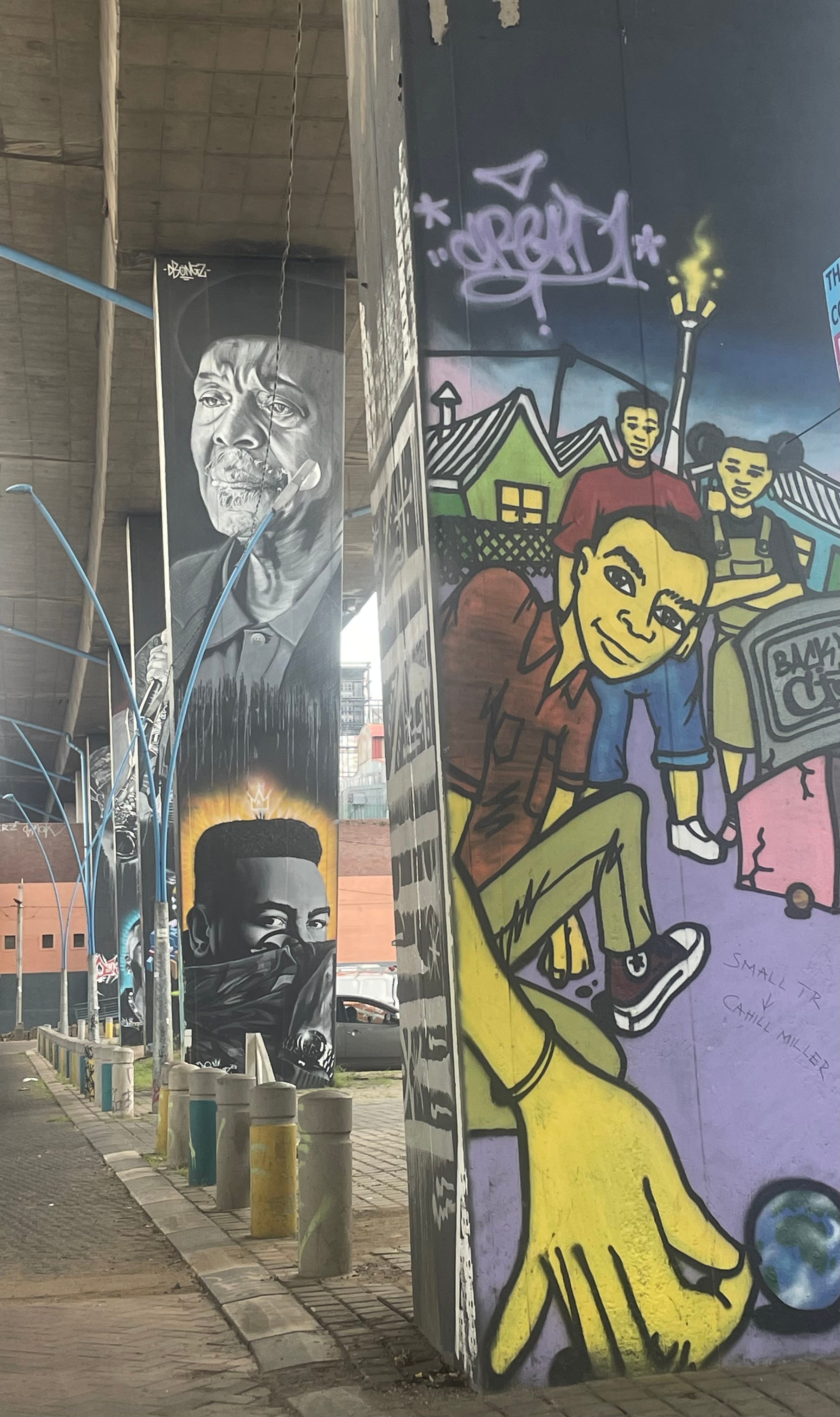
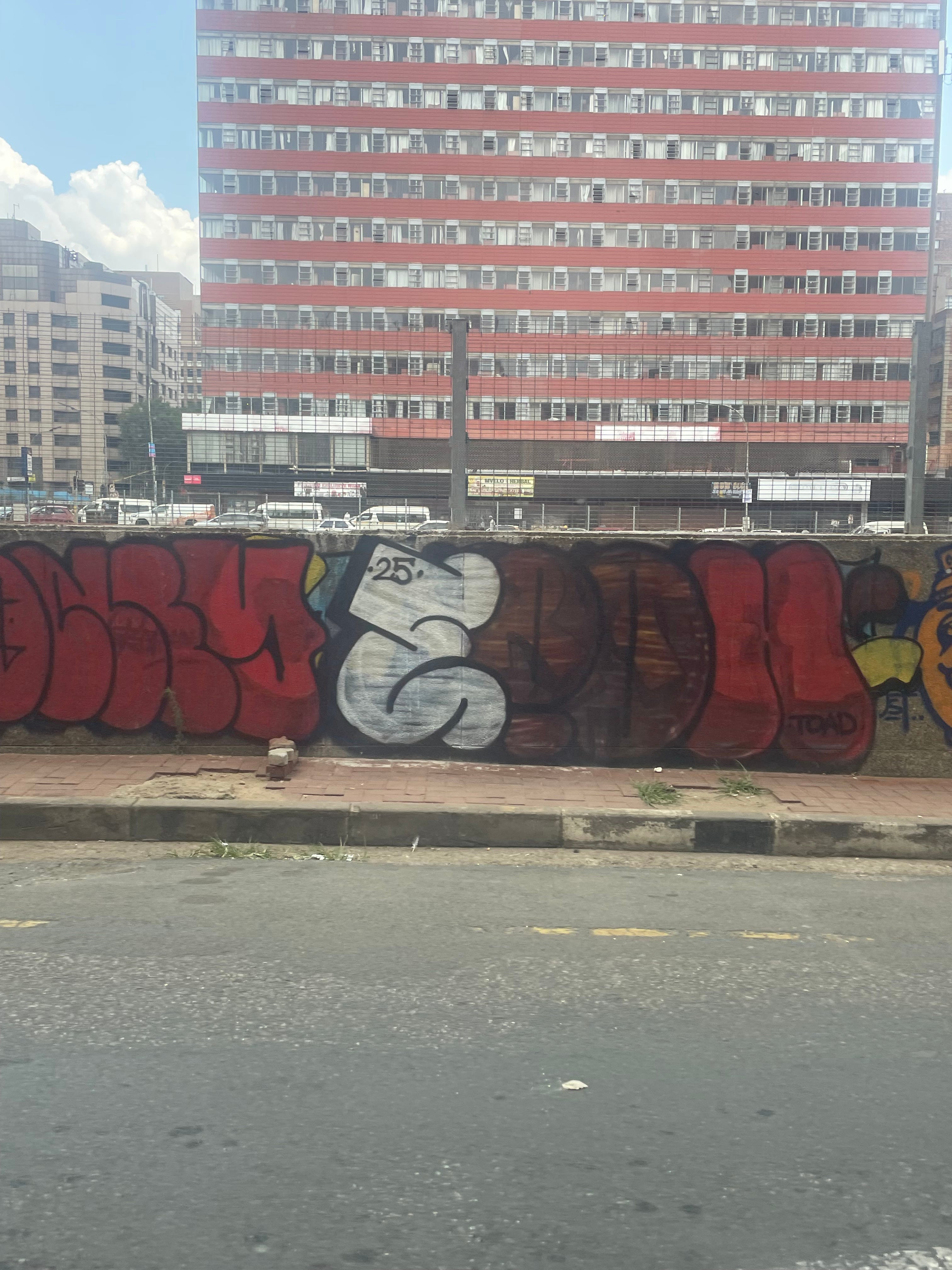
i wrote this poem in the car, on the way from our local oriental plaza. it was hot that day, and all i could see through the car's sunshade was graffiti lining the underpass of a bridge, and in the corners of abandoned buildings, lost to a population migration from the city into the suburbs and oceansides. it’s interesting how some of us run, only because we fear something that hurts those beneath us. we’re impervious to our vulnerability until we are brushing noses with death…colonialism, reimagined, reimagining a land that does not belong to it. but then again, most didn’t leave. our youth escape in the middle of the night, onto the streets and paint and paint and paint their whimsy with bright, violently bright colours. and when they’re done painting, they dance in sketchy clubs with neon lighting on the walls and sing hymns that sound like prayer and perform broadside ballads in half-empty theatres.
someone asked me this question, and for a moment, i felt irritable. it’s clear that we still see reading as an act beyond our comprehension; something to be enjoyed by a certain person, nestled in their comfortable cushion. something that is merely words on a page, belonging to a select few. it doesn’t; it never has. i saw proof of that in the artwork throughout the city — in the heart of town, filled with blue-collar folk rushing to work, rushing home, for something else that isn’t a 9-5. if life could afford it for most of these people i watched, they would likely give it all to sit in their front yard, reading — reading and reading and reading to their hearts’ content. but it isn’t about whether they would like to read; it’s about whether they can. i don’t care to answer this question, because sometimes a question isn’t for asking, but for implying.
South Africa has had an ugly history with colonialism, which has shattered our education system; it has left wounds so large that they continue to affect how our own people perceive literature, reading, and knowledge as something only for the upper echelons. it’s a nightmare, one that several scholars and i are actively trying to deconstruct and refashion. because there is more. we are more. policing ourselves, especially with questions like this, will only set us back at least thirty years. right into Apartheid. mind you, it’s only been thirty-two years since it legally ended. so yes, the question posed at the beginning of this poem feels like so much more.
i wanted to answer it with an inquiry of the heart. what i write, what South African writers do, is not in vain. even if the masses aren’t reading it, these works have a way of finding their audience, and even then, the audience doesn’t make the writing any more valuable. writing is not dependent on the reader’s reception, and living in this reality does not mean that all hope is suddenly lost. furthermore, reading is multifaceted in its makeup; it can transform into whatever it needs to, for us to grasp the story. creation waits for no one. it does not need to be received; only given the air to be. and if i’m entertaining such a question as the one i received from this colleague… well, yes. South Africans do read, and even if they don’t, they do. perhaps not always in the conventional sense, but in the expressions of lives that endure, filling our streets. it is, quite frankly, an insult to overlook the value in these artistic voices, who have so clearly read and translated these words into new fiction. it is that deep.
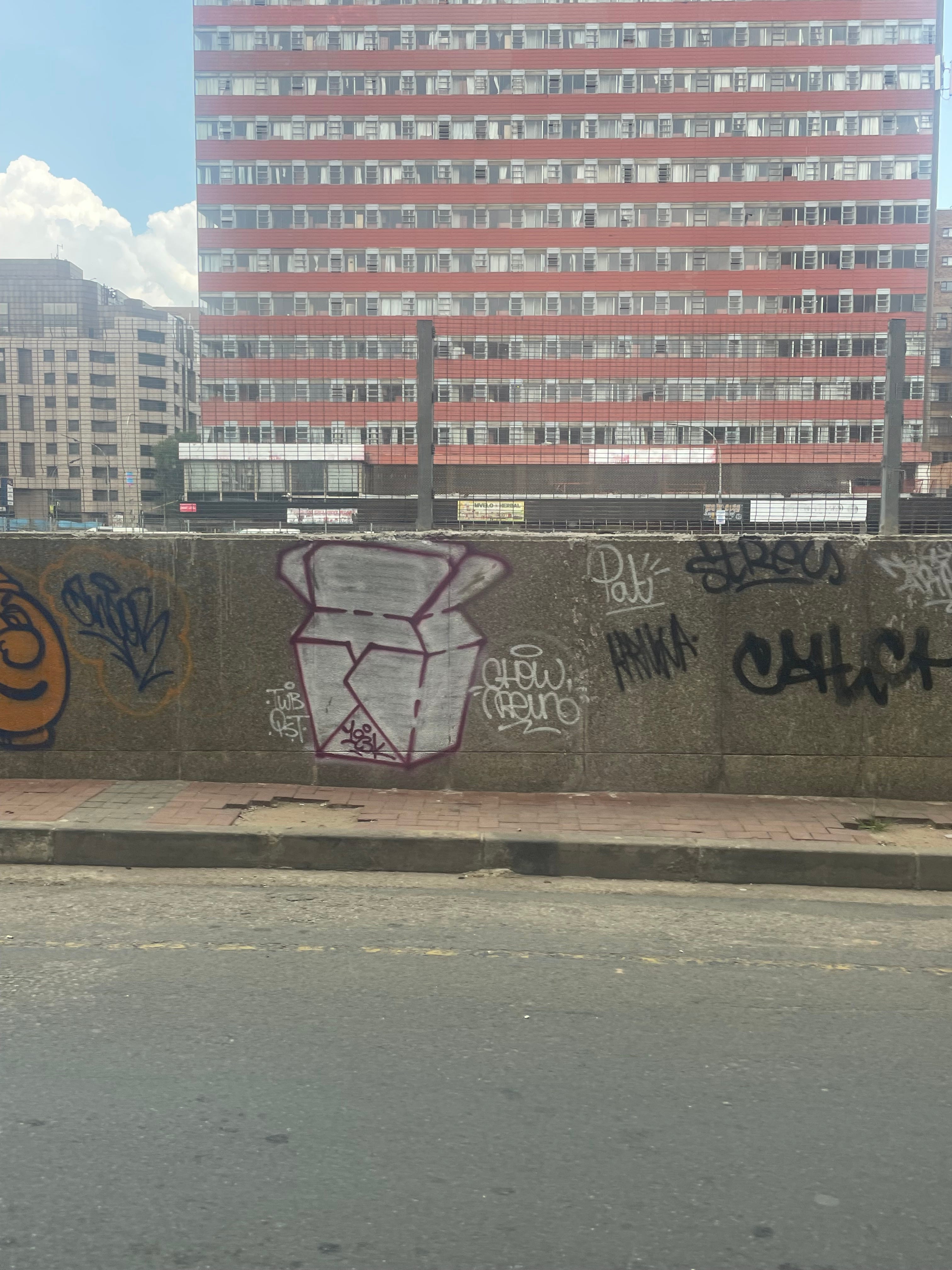
everywhere, all the time, we are reading and reinterpreting. we are doing the work of returning to our stories and interacting with them however we can. the more street art we see, the more i am affirmed that our people yearn to keep reading, writing, singing, and being. we are living the answer.
yours,
Thando x
This is was so refreshing!🥹